
What to Check in a Business Communication Headset Manufacturer
The product is only part of the supplier decision
When buyers look for a business communication headset manufacturer, they often begin with models and prices. That is natural. But for B2B procurement, the supplier behind the product can matter as much as the headset itself. A good sample is not enough if the manufacturer cannot support stable bulk production, clear communication, compatible configurations, OEM/ODM changes, and repeat orders.
The better question is not “Can this factory make a headset?” Many can. The better question is “Can this manufacturer support the way our business will buy, sell, deploy, and reorder headsets?”
That question changes the conversation.
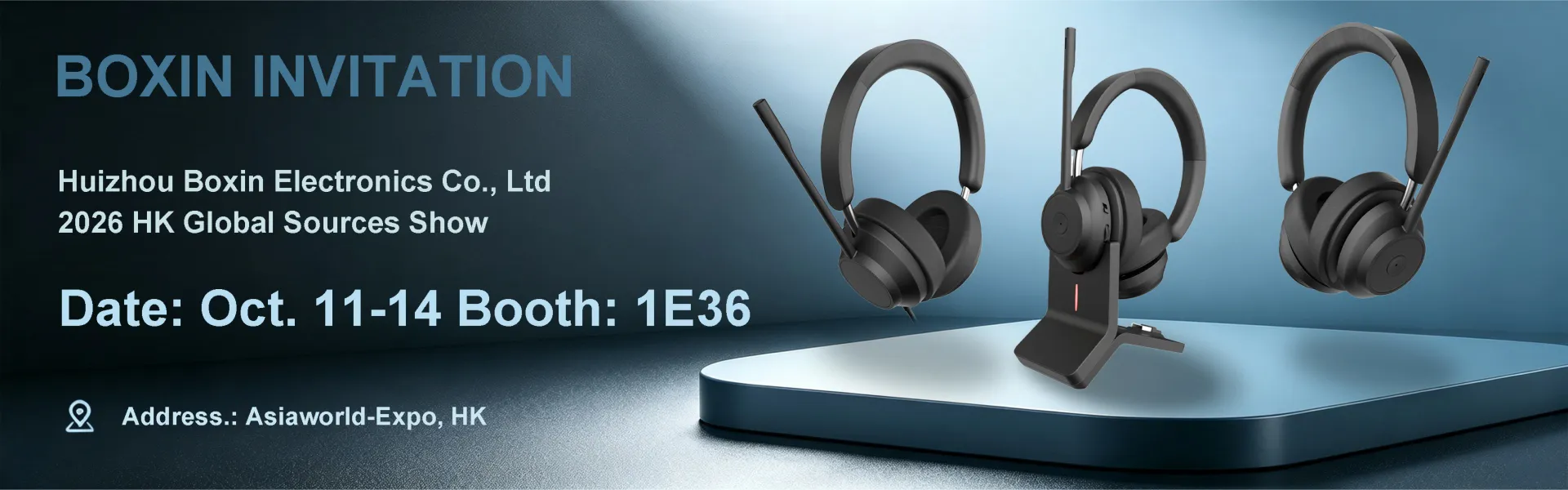
Boxin Electronics is a B2B supplier focused on office headset, call center headset, wireless Bluetooth headset, education headset, UC headset, and OEM/ODM headset projects. For buyers evaluating a manufacturer in this category, the checklist should go beyond catalog photos.
Check whether they understand the user, not only the product
A useful manufacturer asks about the target user. That is usually a good sign. If the supplier immediately pushes one model for every situation, slow down.
Office staff, customer service agents, BPO teams, telesales users, technical support agents, hybrid workers, and school users have different needs. A fixed desk may need a USB office headset. A busy contact center may need a noise cancelling call center headset. A hybrid manager may need a Bluetooth office headset with charging dock. An education hardware brand may need a durable education headset for shared classroom use.
The manufacturer should be able to explain why a product fits one role and not another. A good answer sounds specific, not polished. It may include tradeoffs around mono versus binaural, wired versus wireless, USB-A versus USB-C, microphone noise reduction, replaceable parts, and comfort over long wear.
Check real sample behavior
Samples should be treated as working tools. Buyers should test microphone clarity, headset comfort, connector behavior, platform compatibility, packaging protection, and spare parts. A manufacturer that supports serious sample testing is easier to trust than one that only wants quick approval.
During sample review, pay attention to how the supplier responds to feedback. If users say the cushion is warm after two hours, does the supplier discuss cushion material and clamp force? If the mic sounds thin in open-office noise, do they ask for recordings or only say “it is noise cancelling”? If the buyer needs USB-C, do they confirm the exact configuration?
The response tells you how the project will feel later.
Check OEM and ODM boundaries
Many buyers want OEM headset manufacturer or ODM headset factory support, but those words can mean different things. Ask what can be customized without major tooling, what requires engineering work, and what affects MOQ, cost, sample time, or certification support.
Logo and packaging are usually easier. Color, cable length, cushion material, button labels, accessory kits, and documentation may be manageable depending on the model. Deeper changes such as housing design, microphone structure, acoustic tuning, PCB, charging dock, battery system, or mold development require more careful planning.
A reliable manufacturer should not say yes to everything too quickly. Sometimes the most useful answer is, “This change is possible, but it may affect stability or lead time.” That is not a refusal. That is project discipline.
Check compatibility language
Business communication headsets often need to work with Microsoft Teams, Zoom, Webex, Google Meet, softphones, Windows, Mac, laptops, and docking stations. Buyers should ask how compatibility has been tested and what language can be used in sales materials.
Be careful with certification. Compatible is not certified. If the product supports Teams or Zoom functions but has not completed platform certification, the manufacturer should not help the buyer make a claim that can create trouble later. If certification support is available, treat it as a separate discussion with process, cost, documents, and timing.
Clean wording protects both the buyer and the supplier.
Check repeatability
For business buyers, the second order matters. A headset manufacturer should be able to maintain consistent model specification, materials, cable, microphone behavior, packaging, accessories, and labeling across repeat orders. If the first batch and second batch feel different, the buyer’s brand takes the blame.
Ask how specifications are locked. Ask whether replacement parts can be supplied later. Ask how packaging artwork is controlled. Ask what happens if a component changes. Do not wait until a reorder to ask these questions.
Repeatability is not exciting, but it is one of the main reasons buyers stay with a supplier.
Check communication during problems
Every manufacturing project has problems at some point. A sample needs revision. A package file has the wrong version. A cable choice affects compatibility. A shipment deadline becomes tight. The supplier’s communication style during these moments is more important than their best sales presentation.
A strong manufacturer explains the issue early, gives options, and tells the buyer what each option changes. A weak supplier stays vague until the buyer has no good choices left.
For headset projects, this matters because many details are connected. Changing a connector may affect packaging. Changing a dock may affect accessories. Changing a logo method may affect surface finish. The manufacturer should help the buyer see those links.
A simple audit before committing
Before choosing a business communication headset manufacturer, I would check five things: product fit by user role, sample performance in real use, customization discipline, compatibility wording, and repeat-order support.
Price still matters. It always does. But a slightly lower unit price can disappear quickly if the supplier creates support problems, unclear specifications, or inconsistent reorders.
The right manufacturer should make the buyer feel more certain after each conversation. Not dazzled. Certain. The product path becomes clearer, the risks become visible, and the order feels manageable. That is what buyers should look for when choosing a headset manufacturer for business communication products.